
The Rise of AI Agents
Rapid advancements in artificial intelligence have enabled us to evolve from simple command responders to entities capable of acting autonomously. Today, AI agents have become integrated into many areas of our lives—from personal assistants to enterprise automation systems. This transformation is not just a technological innovation; it is a revolution that profoundly reshapes how we work, communicate, and interact.
AI agents are programs that combine traditional software logic with the flexibility of large language models (LLMs). This combination allows them to perform a broader range of tasks and operate more flexibly compared to conventional software. For example, while traditional software follows strict, predefined commands, an AI agent can understand user intent, create a plan accordingly, and use various tools to execute that plan.
With the rapid developments in recent years, AI agents can now do far more than generate text: they can send emails, manage calendar events, perform analysis, create reports, and even interact with external software systems. These capabilities make them increasingly valuable in both our personal and professional lives.
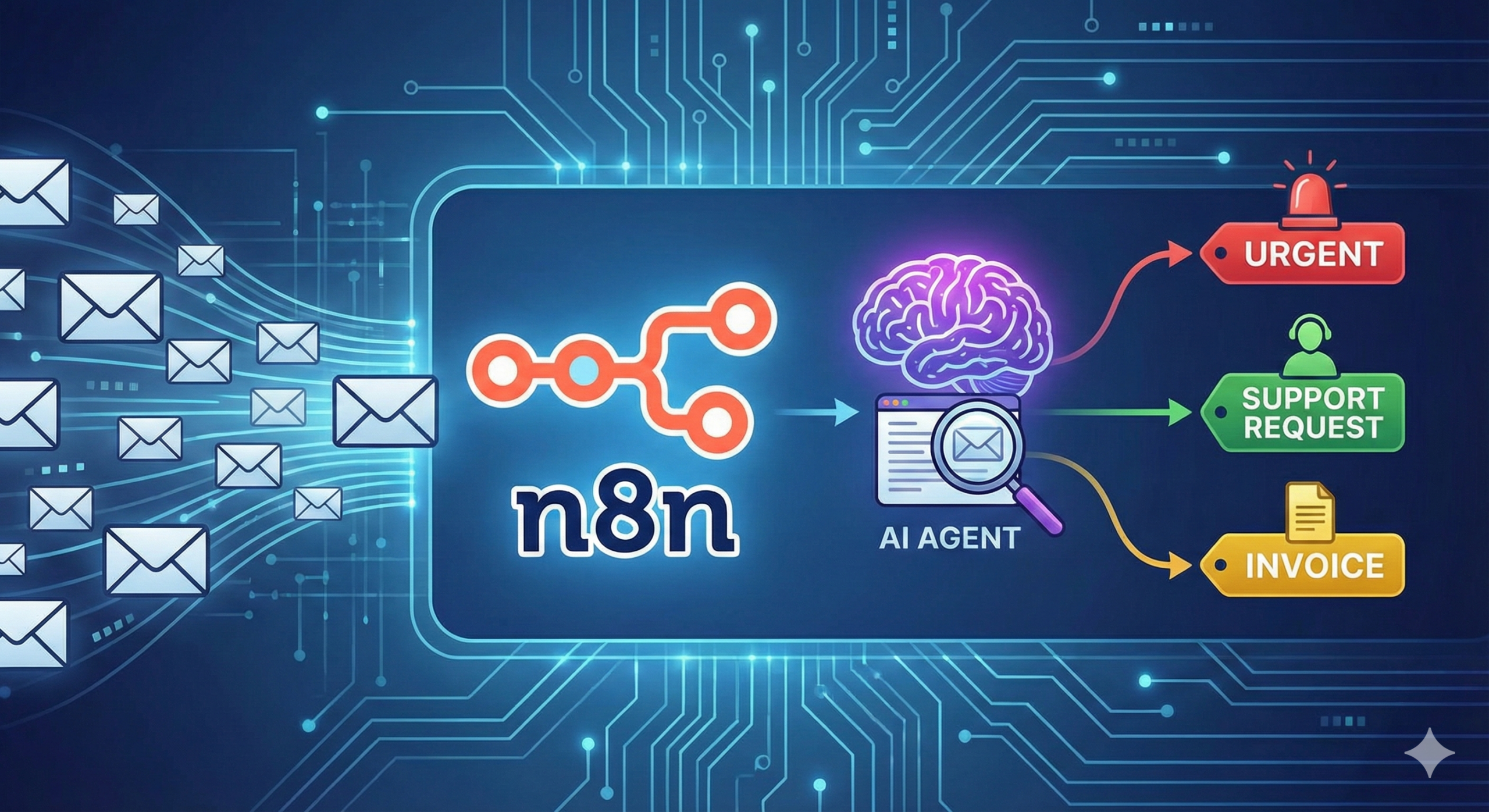
In this article, I aim to explain what AI agents are, how they work, and address common misconceptions. We will also explore how they integrate with automation platforms like n8n, and how this integration can transform business processes. Ready to explore the opportunities and challenges in this exciting area of technology? Then let’s dive into the dynamic world of AI agents.
What Are AI Agents?
An AI agent is a software system capable of performing tasks on its own, making decisions, and acting autonomously to achieve specific goals. Unlike conventional software that follows rigid and predetermined rules, AI agents operate in a flexible, adaptive structure.
AI agents utilize technologies known as large language models (LLMs)—including OpenAI’s GPT models, Anthropic’s Claude, and Google’s Gemini. These models provide the agent with powerful reasoning and decision-making capabilities.
While traditional software is programmed to perform specific tasks, AI agents can understand broader objectives and devise their own plan for achieving them. For example, instead of simply sending a calendar invitation, an AI agent can autonomously schedule a meeting based on the user’s availability.
The Difference Between AI Agents and Large Language Models
AI agents are fundamentally different from LLMs. LLMs generate text using static training data and cannot interact with the world or update their knowledge dynamically.
For example, ChatGPT can only provide information up to the date it was last trained on. Some LLMs integrate web search features—such as ChatGPT-4’s connection with Bing—but this functionality exists as an added tool, not as part of the model’s core capability.
AI agents, however, are far more comprehensive:
-
Interaction: They can interact with the external world and access real-time information.
-
Memory: They can remember previous interactions and learn from them.
-
Action: They don’t just respond—they take action.
-
Adaptation: They continuously adjust to changing conditions.
How Do AI Agents Work?
AI agents function as advanced problem solvers with planning, execution, and learning capabilities. Their operation is based on several core components:
1. Planning and Goal Setting
AI agents begin by defining a goal and breaking it down into manageable tasks. This process is similar to the “Chain of Thought” approach used in prompt engineering. The agent decomposes the problem and forms a step-by-step plan.
For example, given a goal like “Prepare the sales report for the upcoming quarter,” the agent might plan:
-
Analyze previous quarter’s data
-
Conduct trend analysis
-
Create visual charts
-
Summarize key findings
-
Format the report for presentation
2. Tool Interaction
Modern AI agents can interact with various tools that expand their capabilities by providing access to:
-
Web browsers
-
Databases
-
APIs
-
File systems
-
Email and messaging services
-
Calendar and scheduling tools
-
CRM and ERP systems
Through these tools, the agent gathers information and performs necessary actions autonomously.
3. Memory and Information Storage
AI agents can store information and use private or external data sources when necessary. Their memory structure operates on two levels:
-
Short-Term Memory (Context Window): Stores information relevant to the current task or conversation.
-
Long-Term Memory: Stores user preferences, previous interactions, and learned information.
The Context Window and Why It Matters
The context window is one of the most critical factors defining how effective an AI agent can be. It determines the maximum amount of information the agent can process at once.
-
Modern models like GPT-4 support 8K, 16K, or even 32K tokens.
-
A larger context window allows agents to handle longer documents, remember conversations, and manage complex workflows.
Techniques for Optimizing Context Usage:
-
Summarization
-
Information indexing
-
Retrieval-Augmented Generation (RAG)
-
Vector databases for semantic memory retrieval
By using vector databases, agents can access information far beyond the limits of their context window.
4. Action Execution
AI agents can execute a wide range of tasks such as writing reports, sending emails, managing software applications, or coordinating with other agents specialized in specific tasks.
For example:
A user says:
“Schedule a meeting with Berke tomorrow at 3 PM and send him the agenda.”
The AI agent will:
-
Check the user’s calendar
-
Confirm Berke’s availability
-
Prepare the agenda
-
Create the meeting invite
-
Send the necessary emails
AI Agent Architecture
AI agents are not just a single AI model—they are full systems composed of multiple interconnected components:
-
A core reasoning model (LLM)
-
Tool integrations
-
Memory systems
-
Planning and decision-making frameworks
-
Execution engines
-
Long-term knowledge stores
-
Logging and monitoring systems